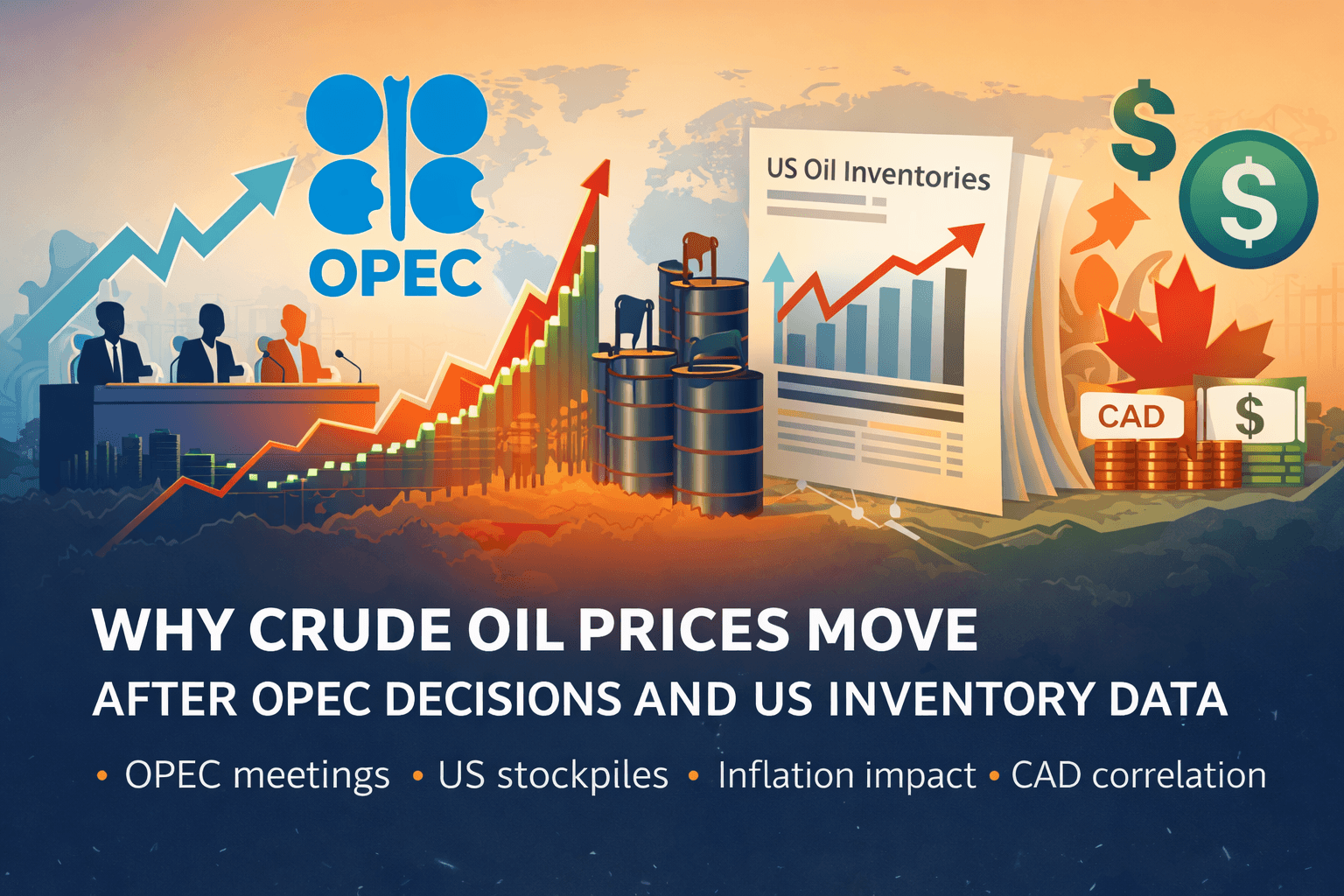
Crude oil is not just a commodity—it is a global economic signal. Changes in oil prices influence inflation, transportation costs, central bank decisions, currency movements, and overall market sentiment. For traders and investors tracking crude oil today, price movements often appear sudden and aggressive, especially after OPEC meetings or the release of US oil inventory figures.
These sharp moves are not random. They occur because oil markets react to changes in future expectations, not just present conditions. Among all influencing factors, OPEC policy decisions and US oil stockpile data carry the strongest weight in shaping WTI price news and broader energy market direction.
How the Crude Oil Market Actually Functions
The crude oil market operates on anticipation rather than reaction. Prices reflect what traders believe supply and demand will look like weeks or months ahead.
Oil pricing is influenced by:
-
- Expected availability of supply
-
- Forecasted consumption levels
-
- Strategic policy decisions by producers
-
- Storage levels and logistical capacity
-
- Macroeconomic outlook
When market participants analyze crude oil today, they are interpreting new information that alters the expected balance between future supply and demand.
The Strategic Influence of OPEC on Oil Supply
OPEC represents a coordinated group of oil-producing nations that actively manage production output. Unlike individual producers, OPEC’s decisions are collective and strategic, designed to influence long-term market stability rather than short-term pricing.
Because oil production planning involves long lead times, any guidance from OPEC regarding output levels immediately alters expectations—even before any physical change in supply occurs. This is why OPEC decision impact is felt instantly in oil prices.
Why OPEC Announcements Cause Immediate Volatility
Oil markets rarely wait for actual production changes. Instead, they respond to:
-
- Forward guidance
-
- Policy signals
-
- Tone of official statements
-
- Commitment or hesitation toward supply discipline
If OPEC signals tighter control over production, markets begin pricing in reduced availability. If it signals flexibility or higher output tolerance, prices adjust downward.
This expectation-driven behavior explains the sharp reactions seen in WTI price news immediately after OPEC announcements.
Crude Oil Supply Is About Access, Not Reserves
Having oil underground does not guarantee supply to the market. What matters is how much oil is actively delivered, transported, refined, and distributed.
Supply availability is affected by:
-
- Production agreements
-
- Infrastructure constraints
-
- Political disruptions
-
- Export policies
-
- Operational shutdowns
OPEC decisions influence this accessible supply, which is why oil prices respond even when global reserves remain unchanged.
Why Prices Often Move Before OPEC Decisions Are Official
Oil prices frequently adjust ahead of official OPEC statements. This happens because traders position themselves based on probability, not certainty.
If markets strongly believe a production cut is coming, prices may rise in advance. When the decision becomes official, prices may stabilize—or even reverse—if expectations were already priced in.
This behavior is a key reason traders must understand sentiment when tracking crude oil today, rather than relying solely on headlines.
The Importance of US Oil Inventory Reports
While OPEC influences structural supply trends, US oil inventory data provides insight into immediate market conditions.
Inventory levels reflect:
-
- Consumption speed
-
- Refinery demand
-
- Domestic production flow
-
- Import and export balance
Because the US plays a major role in both oil consumption and production, changes in stockpiles offer real-time clues about demand strength.
How US Stockpile Changes Influence Prices
Oil inventory figures indicate whether oil is accumulating or being absorbed by the market.
-
- Declining stockpiles suggest demand is exceeding supply
-
- Rising stockpiles indicate surplus or slower consumption
When inventory results differ sharply from market forecasts, traders react instantly, leading to rapid price changes often highlighted in WTI price news.
Why Market Forecasts Matter More Than Raw Data
Oil prices do not move based on inventory numbers alone—they move based on how those numbers compare to expectations.
A moderate inventory decline can trigger a rally if the market expected a build. Similarly, even a small inventory increase can push prices lower if a draw was anticipated.
This is why inventory releases are among the most closely watched events for those following US oil inventory trends.
The Connection Between Oil Prices and Inflation
Energy costs are embedded in nearly every economic activity. As oil prices rise, the cost of transporting goods, producing materials, and delivering services also increases.
This creates upward pressure on consumer prices, making crude oil a key inflation driver. As a result, oil price movements influence central bank policy expectations and financial market behavior.
How OPEC Decisions Shape Inflation Outlook
When oil supply is deliberately restrained, higher energy prices can strengthen inflationary pressures. Markets may then anticipate:
-
- Slower interest rate reductions
-
- Prolonged restrictive monetary conditions
-
- Increased financial market volatility
Conversely, greater oil availability can help moderate inflation expectations, improving economic sentiment.
The Role of Currency Valuation in Oil Pricing
Crude oil is traded internationally using a single settlement currency. Changes in currency valuation affect purchasing power for global buyers.
When exchange rate conditions shift, oil demand dynamics adjust accordingly. These interactions can intensify price reactions following OPEC decisions or inventory data.
Why the Canadian Dollar Is Sensitive to Oil Prices
Canada’s economic performance is closely tied to energy-related trade activity. Oil exports contribute meaningfully to income flows, investment, and fiscal stability.
As oil prices rise:
-
- Trade revenues improve
-
- Economic expectations strengthen
-
- Currency demand often increases
When oil prices fall, the opposite pressure can emerge. This is why oil movements frequently influence currency markets alongside commodities.
Understanding CAD and Oil Market Interaction
Currency traders often use oil price trends as a confirmation signal when analyzing USD/CAD. A sustained oil rally can support the Canadian dollar, while prolonged oil weakness can weigh on it.
This correlation is driven by economic exposure rather than speculation, making oil data relevant beyond commodity markets.
Why Oil Prices Can Rise Even When Growth Looks Weak
At times, oil prices move higher despite sluggish economic indicators. This occurs because oil markets price future supply risk, not just current demand.
Factors that can support prices include:
-
- Anticipated production constraints
-
- Strategic stock rebuilding
-
- Supply chain vulnerabilities
-
- Political uncertainty affecting output
Oil markets look ahead, often reacting before economic data fully reflects changes.
Speculation and Positioning in Oil Markets
Large financial institutions play a major role in oil price movements. Ahead of key events, traders reduce or rebalance exposure, increasing short-term volatility.
This positioning activity can amplify price moves, making reactions appear exaggerated compared to fundamental changes alone.
Why Volatility Spikes Around Key Oil Events
Oil volatility increases when uncertainty peaks. Events such as:
-
- OPEC policy updates
-
- US inventory releases
-
- Macroeconomic surprises
-
- Geopolitical developments
force rapid reassessment of market expectations. Prices adjust quickly as new information is absorbed.
How Professional Traders Analyze Oil Data
Experienced traders do not rely on a single indicator. They combine:
-
- OPEC policy direction
-
- Inventory trend consistency
-
- Inflation expectations
-
- Currency and macro signals
This layered approach helps reduce emotional decision-making and improves trade quality.
Common Errors Made by Retail Oil Traders
Many traders struggle in oil markets due to:
-
- Trading news without context
-
- Ignoring expectation pricing
-
- Using excessive leverage
-
- Chasing volatility
Understanding why oil prices move is more important than reacting to how much they move.
Final Summary: Why Crude Oil Reacts So Strongly
Crude oil prices respond sharply after OPEC decisions and US inventory data because these events directly reshape future supply expectations, short-term demand signals, inflation outlooks, and currency dynamics.
OPEC defines the strategic supply framework, while US oil inventory data reveals immediate market conditions. Together, they form the backbone of oil price behavior.
For traders monitoring crude oil today, understanding OPEC decision impact, US oil inventory trends, and WTI price news is essential—not optional.
When understood correctly, oil market volatility becomes a structured opportunity rather than unpredictable risk.
Visit our Social media pages:
https://www.instagram.com/hadyjfx_official/
https://www.youtube.com/@hadyjmentor7793
https://www.facebook.com/profile.php?id=61562232239915